


The CTC Technology Centre is set to develop innovative coatings designed to ensure the safe storage of green hydrogen in the HYDROSTORE project. This research initiative aims to create floating wind platforms capable of generating green hydrogen with high storage capacity. This disruptive solution is expected to significantly reduce costs associated with this renewable energy source and accelerate the energy transformation in Spain and Europe.
The project launch meeting was hosted at the headquarters of Berenguer Ingenieros, the leader of the HYDROSTORE consortium. The initiative is financed with 2.17 million euros through the Strategic Project for the Recovery and Economic Transformation of Renewable Energies, Renewable Hydrogen and Storage, known as PERTE ERHA.
Beridi Maritime, Idesa Trc Technology & Research Centre, Leading Metal Mechanic Solutions, Astander, Berthing Maritime Consulting and the CTC Technology Centre completed the list of partners in this research, which has a projected duration of 24 months. Their contributions will be crucial for making green hydrogen an accessible and affordable energy source in the medium term.
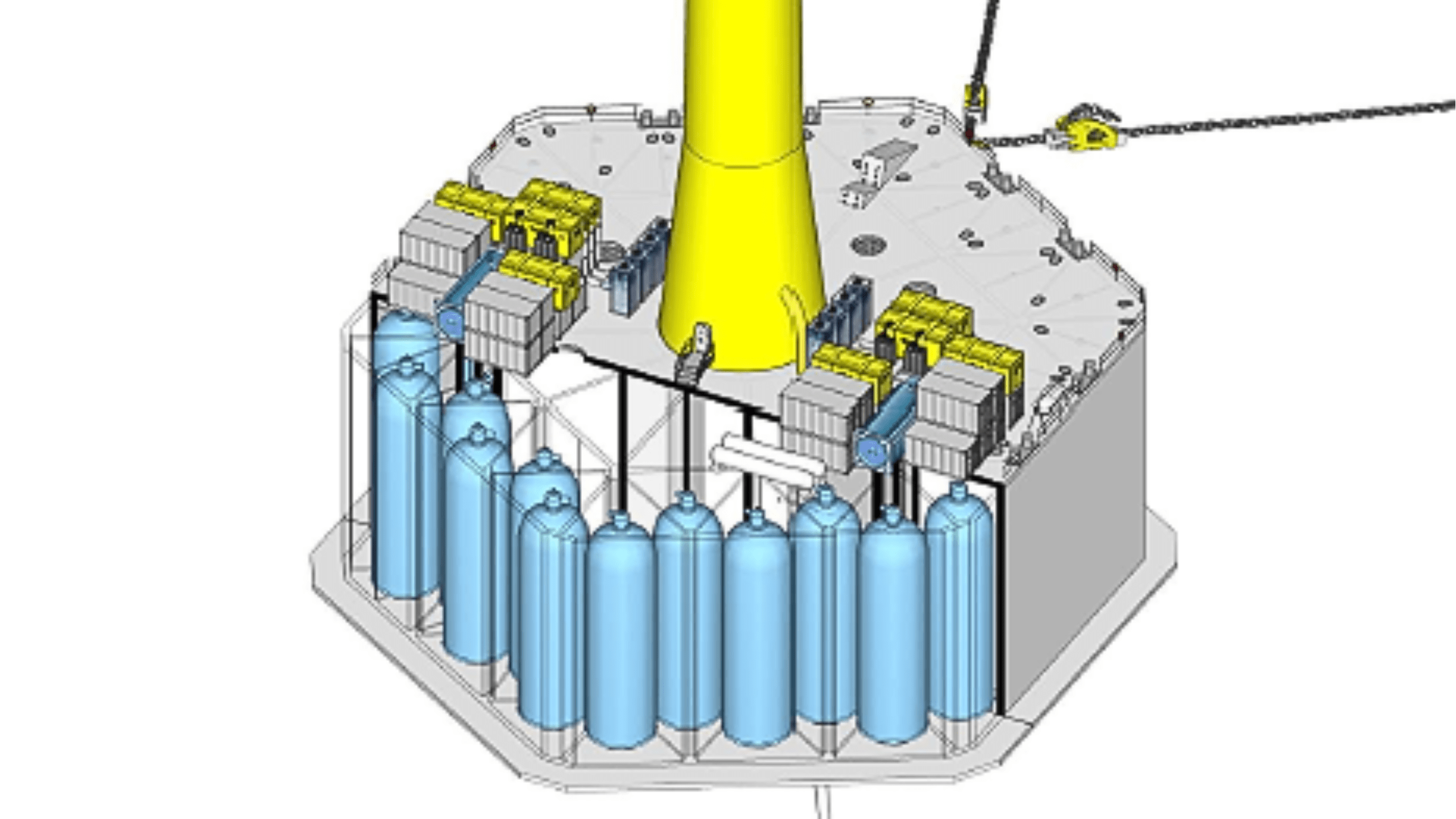
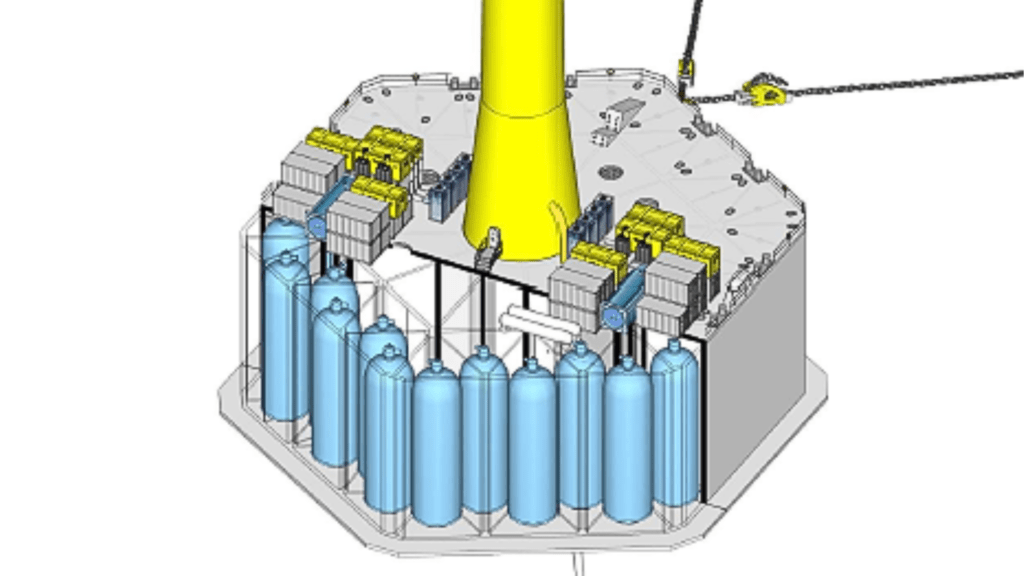
HYDROSTORE is planning the development of an integrated green hydrogen production and storage plant. This facility will feature a floating offshore wind turbine, whose substructure will not only house all the hydrogen generation equipment but will also incorporate storage tanks within its inner cells.
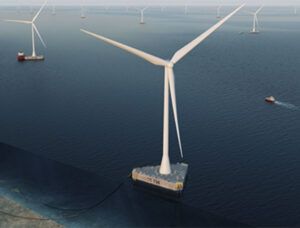
This innovative solution addresses two major challenges currently faced by offshore green hydrogen production: (1) Most ongoing projects cannot install generation equipment on the same platform and often require ancillary supports where electricity must be transported to facilitate the process; and (2) there is currently no floating platform capable of large-scale storage for this type of energy.
Integrating floating wind technology, in which Spain is an international leader, with the production of green hydrogen presents an unprecedented opportunity both to overcome long-distance electricity transmission issues and to position Spain as a global leader in the generation and distribution of green hydrogen.
Generating and storing green hydrogen
The core aspect of the project involves adapting the TRWIWIND-HEX floating wind platform for on-site generation and storage of green hydrogen. The platform, constructed primarily from concrete, features a hexagonal internal structure resembling a honeycomb, which is designed to integrate large-scale storage tanks.
This unique design efficiently distributes forces, offering exceptional resistance to the harsh conditions of the marine environment. The platforms are engineered to be highly stable and capable of supporting wind turbines ranging from 15 to 22 MW—the largest currently available. On the roof of the structure, there are plans to install systems for desalination, electrolysis and hydrogen compression. This setup ensures that both the production and subsequent storage of green hydrogen occur on-site, eliminating the need for additional offshore support facilities.
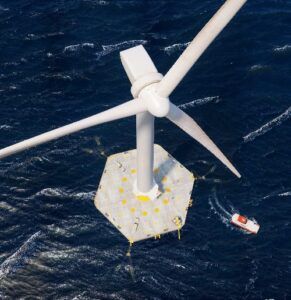
This positions HYDROSTORE as a type of ‘offshore gas station’ conceptualised as a station for the generation and storage of green hydrogen, which can be transported to land via gas tankers as needed. This approach eliminates the necessity for expensive pipelines or frequent hydrogen shipments, thereby reducing costs and enhancing efficiency.
In addition to undertaking various common tasks, the CTC will spearhead Work Package 3, focusing on the research and development of new materials to ensure the safe storage of hydrogen within the platform’s cells. Leveraging their extensive experience and expertise, the Centre’s research team will develop innovative materials for concrete coatings designed to guarantee effective hydrogen sealing.
To achieve these objectives, researchers at the Cantabrian Centre will conduct studies to validate the new materials against challenges such as hydrogen permeability and degradation in marine environments. Among them, a test conducted at MCTS El Bocal will assess the efficacy of the new materials/solutions in combating marine corrosion under real conditions over six months.
Furthermore, the Centre will develop predictive tools to ensure safety during the transfer phase by anticipating operational windows in offshore facilities based on weather conditions. It will also compare various hydrogen storage solutions in terms of environmental impact, specifically analysing the carbon footprint of different storage methods.
Opportunity for development
Floating wind power presents Spain with an unprecedented opportunity to establish itself as a global leader in renewable energy. Spain is ranked as the fifth-largest wind power generator globally. However, the country has very few offshore projects, largely due to the high depth of its territorial waters, which complicates the installation of wind turbines with fixed foundations, which is the most common method used in marine environments to date. Projects such as HYDROSTORE enable Spain to overcome this challenge by harnessing the high availability of strong and constant winds at sea.
The potential for offshore wind, when attached to the seabed, is estimated to be 156% greater than the global electricity demand. With the development of floating wind technologies that can reach deeper and more distant waters, the potential by 2040 is projected to be 11 times higher than the estimated global electricity consumption for that year.
However, a significant challenge remains: the most potent offshore wind sites are often far from the coast. Establishing long-distance electricity transmission networks in these areas can be prohibitively expensive, substantially increasing the cost of energy and, in many cases, rendering projects unfeasible.
This is precisely where hydrogen plays a pivotal role as an agent that enables the storage of green energy and facilitates its subsequent distribution to urban and industrial centres globally. Indeed, the potential to install green hydrogen production plants on floating platforms represents a strategic opportunity to maximise the wind energy resource. This innovative approach could circumvent the need for extensive cabling and eliminate the significant electricity distribution costs, which currently account for 20-30% of the fixed costs of an offshore wind farm.


