



The CTC Technology Centre has successfully achieved the first milestone of the FABRICARE project. As part of this initiative, the Cantabrian Centre has thoroughly analysed current regulations governing collaborative and mobile robotics solutions in industrial environments. This research is critical for technology transfer projects aimed at helping companies enhance processes, cut costs and boost productivity.
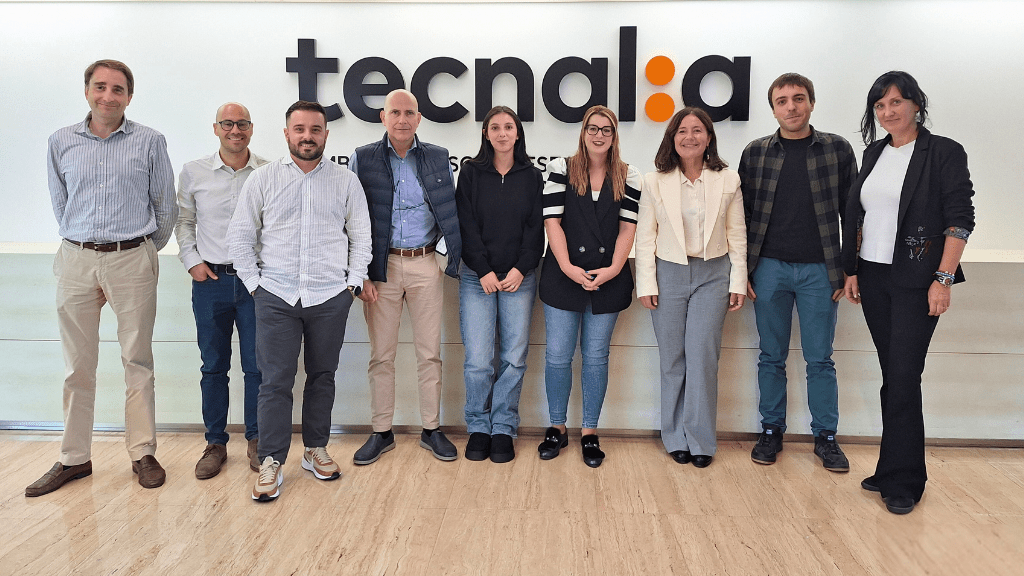
The five technology centres, which comprise the consortium, CEIT, IKERLAN, TECNALIA, AIDIMME and CTC, convened with the CDTI technician in charge of the project to review the first milestone. This working session took place at TECNALIA’s facilities in San Sebastian, where the progress made so far was evaluated, the activities undertaken during the first milestone were presented, and some challenges for the second year of the initiative were discussed.
The CTC team presented their analysis of current regulations applicable to mobile robotics—which can navigate various environments and perform complex tasks—and collaborative robotics, where operators and robots share a workspace.
They aimed to identify potential overlaps or grey areas that may arise when superimposing these regulations to provide a set of considerations or best practices to be considered when working on applications that combine both scenarios.
Establishing a clear safety and operational framework ensures an efficient and safe environment when integrating both technologies within the same industrial space. In this respect, each type of robot is subject to different risks. Mobile robotics must adhere to specific standards for safe navigation and obstacle detection, such as ISO 3691-4, which governs the safety of autonomous vehicles in pedestrian areas. Collaborative robotics is also primarily regulated by ISO/TS 15066, which establishes limits for speed and force during human-robot interaction.
With a clear legal framework now established, CTC will focus on developing localisation and navigation solutions for mobile robots. Initially, a study was conducted on technologies that enable precise localisation of these robots, both indoors and outdoors. In this respect, it was also disclosed that CTC is enhancing its capabilities by acquiring new equipment to prepare for implementing a demonstrator set to be launched in the project’s third year.
The meeting proceeded as planned, and the five consortium members received commendations from the CDTI technician. The initiative, ‘Collaborative, Safe and Intelligent Manufacturing through Advanced Interfaces, Robotics, and Digital Twins – FABRICARE’, serves as a centre of excellence training programme to increase the capabilities of participants within the realm of intelligent manufacturing in collaborative environments. This proposal seeks to catalyse the Spanish industrial sector, with projections indicating a 15.5% increase in revenue from corporate contracts.
Supported by a budget of 3.47 million euros, FABRICARE is scheduled for completion in June 2025 and falls under the Cervera Grants for Technology Centres 2023 – NGEU, within the ambit of ‘Knowledge Transfer’, Investment 5 of Component 17 in the Recovery, Transformation and Resilience Plan.


