


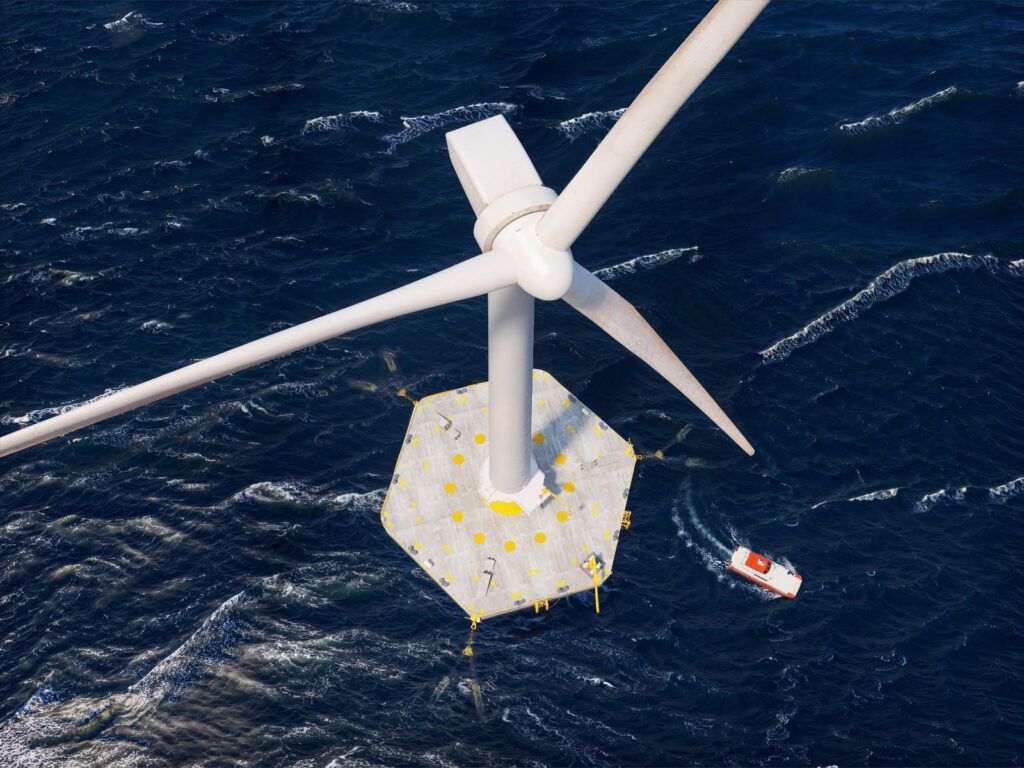
While floating wind energy is recognised as a strategic and effective solution for achieving the sustainable development goals set by the European Union, installing these structures in the marine environment presents substantial environmental challenges. In response, the CTC Technology Centre is developing a multidisciplinary strategy aimed at cutting the carbon footprint of Beridi Maritime SL’s patented concrete-based floating wind platform by over 30%. This innovative approach will not only minimise the environmental impact but also support the installation of the largest wind turbines currently on the market.
CTC’s initiative, spanning 36 months with a budget exceeding 760,000 euros, seeks to optimise the performance of these concrete floating platforms while also increasing their resilience against harsh marine conditions, extending their service life and decreasing the frequency of maintenance.
ECOFLOWIN is a project led by Beridi Maritime and part of the Public-Private Partnership 2023 Call of the State Research Agency. This initiative takes a fully multidisciplinary approach, proposing an advanced structural design that optimises floating structures to maximise their efficiency and reduce the use of polluting materials. It also introduces slipforms, an innovative construction method that expedites the manufacturing process and cuts resource consumption.
CTC will also develop lighter, stronger and more sustainable synthetic fasteners, along with new mortar and concrete formulations. In this respect, traditional components like cement and aggregates are set to be replaced with industrial waste and nanomaterials to enhance structural resistance against marine degradation. Lastly, the project integrates the use of innovative life cycle analysis (LCA) methodologies to assess and minimise the environmental impacts of the platforms throughout their lifespan. This comprehensive assessment capability is essential for ensuring that these technologies are sustainable not only in their design but also in their implementation and long-term operation.
In this respect, the CTC’s Advanced Materials and Nanomaterials area boasts considerable expertise in enhancing the performance of concrete coatings used in marine settings. In the MADAME project, CTC researchers have achieved a significant breakthrough, reducing the porosity and permeability of this building material by up to 112%.
Future opportunity
Europe is on a path to becoming the first climate-neutral continent by 2050. Floating wind energy is regarded as a strategic solution to overcome the current challenges associated with transitioning to more sustainable energy sources, as well as a significant business opportunity. In fact, the market for floating platforms is projected to reach a value of 22 billion euros by 2035.
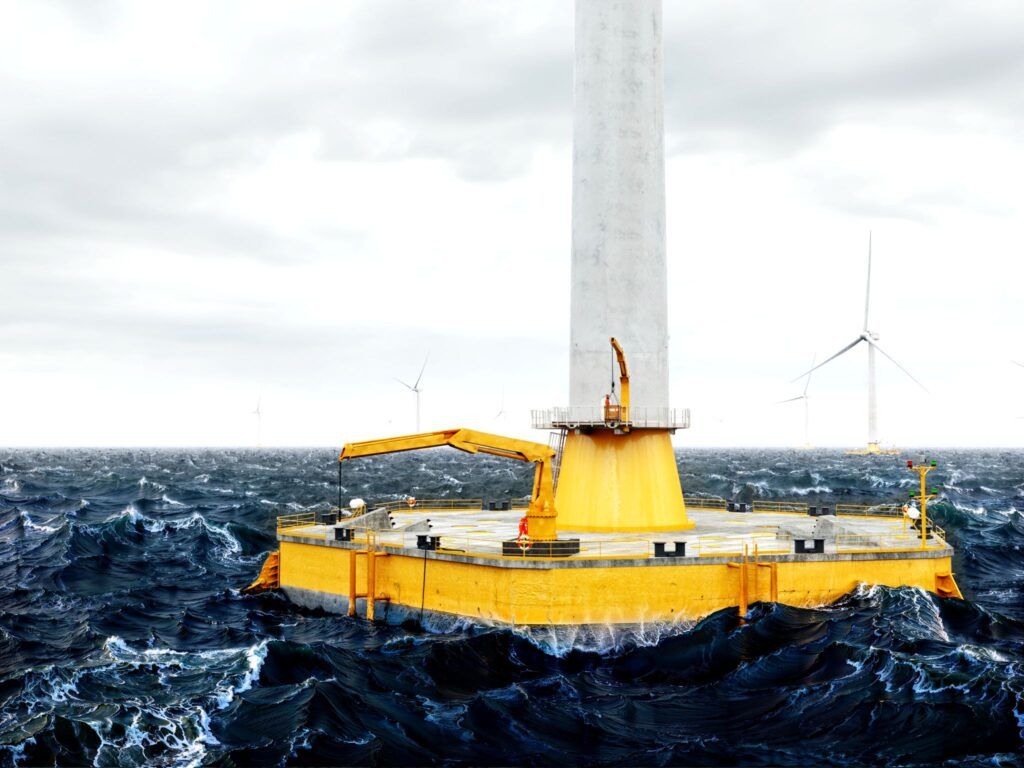
Furthermore, the installation of turbines in deep waters, where winds are steadier, significantly contributes to the net zero emissions target set by the European Green Deal. Currently, the installed capacity of floating wind turbines in Europe stands at 121 MW, but this figure is projected to soar to 18.9 GW by 2030 and 264 GW by 2050.
This exponential growth highlights the urgent need for sustainable development practices to address the substantial carbon footprint of these technologies, notably the production of cement, which accounts for about 8% of global CO2 emissions. In response, ECOFLOWIN is pioneering innovative solutions aimed at reconciling the demand for clean energy with the imperative to reduce the environmental impact of its production.


