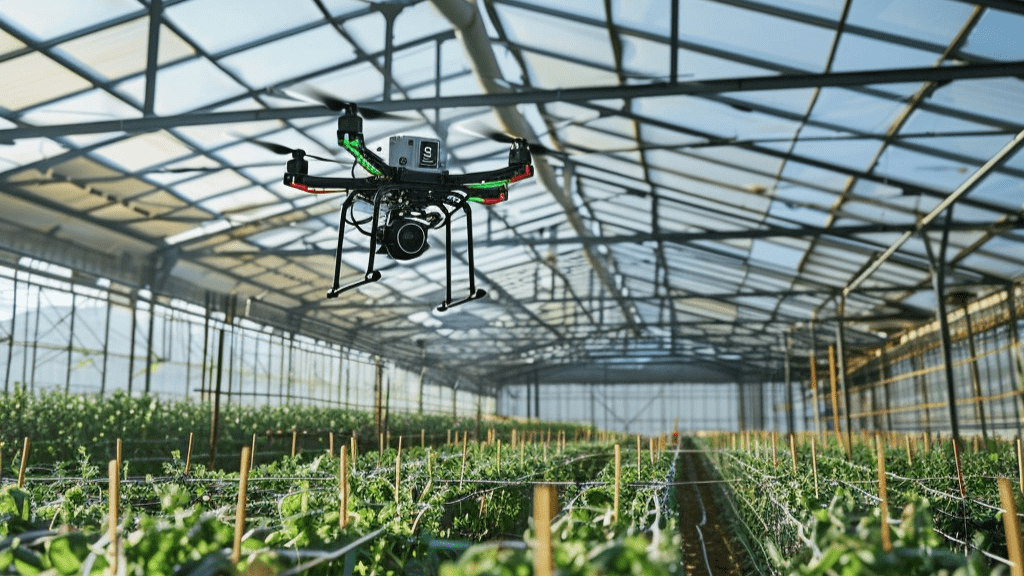
CTC has led the analysis of the adaptation requirements for both greenhouse environments and the ground and aerial robots to be used in the LIFE ACCLIMATE project. The main priorities identified by the team at the centre involved in this European research initiative include achieving precise localisation in indoor environments such as greenhouses, ensuring safe and efficient navigation and securing reliable capture of data from sensors and cameras.
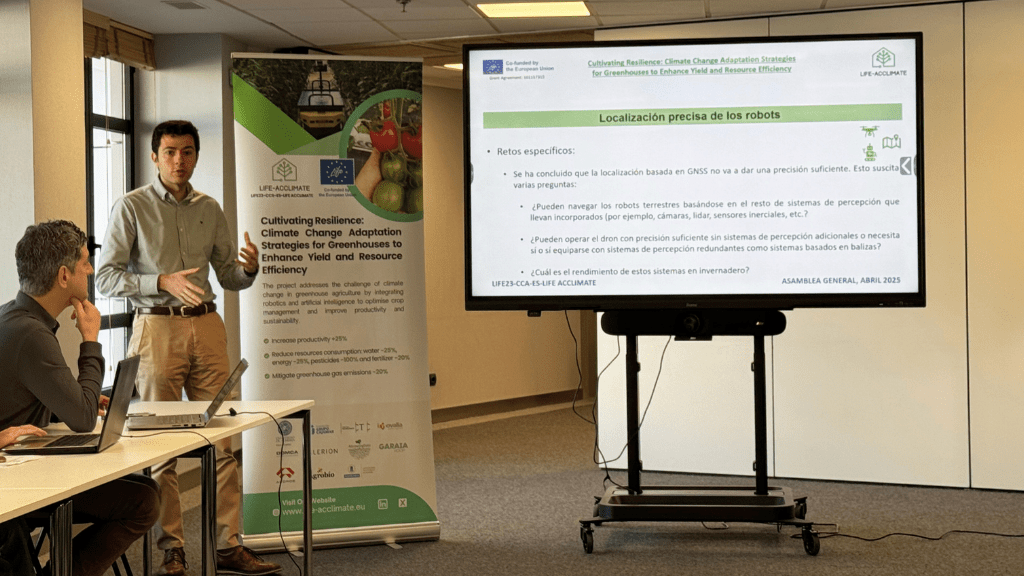
These conclusions form part of Deliverable D2.2, led by the Cantabrian centre and presented during the general meeting of the project, held at the Innovalia facilities in the Zamudio Technology Park. Alejandro López, manager of the Navigation and Robotics area at CTC, presented the key findings of this work, which will be crucial for implementing the final prototype of the robotic platform to be used in both demonstrators and replicators.
The objective of this work package, WP2 – CHARACTERISATION OF THE DEMONSTRATORS AND DEFINITION OF SOLUTION NEEDS, has been to define the scope of the demonstration activities in each of the three greenhouses participating in the project. It also aimed to establish the necessary adaptations to both the robots and the AI-based prediction models to enable the successful implementation of these demonstrations. LIFE ACCLIMATE has defined a mission policy for the three robots to be used in the project, two ground-based and one aerial, which will operate in the greenhouses of the Cajamar Group Foundation, the University of Almeria, and Garaia Koop, the latter of which visited CTC last October.
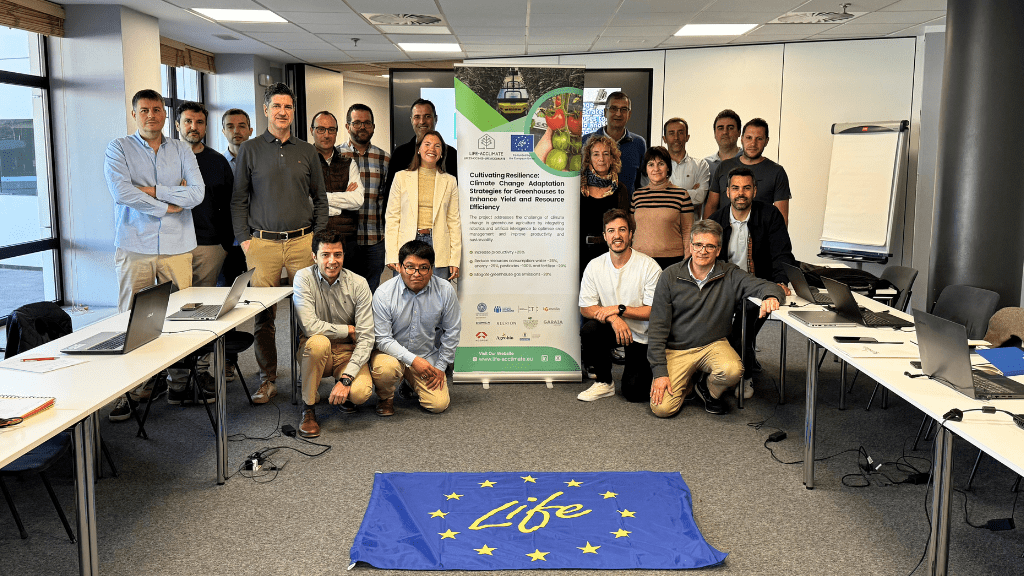
At the second in-person meeting of the consortium since the launch event in Almeria in September, the eleven organisations involved in the research took a comprehensive look at the progress achieved to date. Alongside CTC, ACORDE is the other regional representative in this project, which has received €4.46 million in funding and is scheduled for completion in July 2028. This marks the second European project under the LIFE programme in which CTC is participating.
LIFE ACCLIMATE pioneers the deployment of an innovative model for greenhouse management. This model will harness data and images collected by autonomous aerial and ground robots to fuel advanced systems designed for productivity prediction and resource optimisation. The integration of artificial intelligence and a decision support system embodies a holistic approach, poised to enhance crop productivity by 25% and reduce the impact of pests and diseases on plants by half.
Similarly, this model of sustainable and efficient greenhouse horticulture represents a step forward in the climate change adaptation strategy, which will inevitably require a transformation of the current agricultural system. LIFE ACCLIMATE aims to enhance water efficiency, reduce energy consumption, and mitigate greenhouse gas emissions by 25%. The project uses precision nutrient management techniques and data mining to eliminate the use of chemical pesticides and reduce fertiliser usage by 20%.