


The CTC Technology Centre and Cantabrian company VBE6D have presented the first version of an Open BIM digital twin designed to optimise the life cycle of buildings. This tool enables comparing between the estimated performance of a building and the actual values recorded during its construction. By contrasting the two data sets, it becomes possible to detect deviations in advance and optimise key aspects such as building flexibility, thermal management, energy forecasting, intelligent sustainability, occupant comfort, and risk prevention throughout the building’s life cycle.
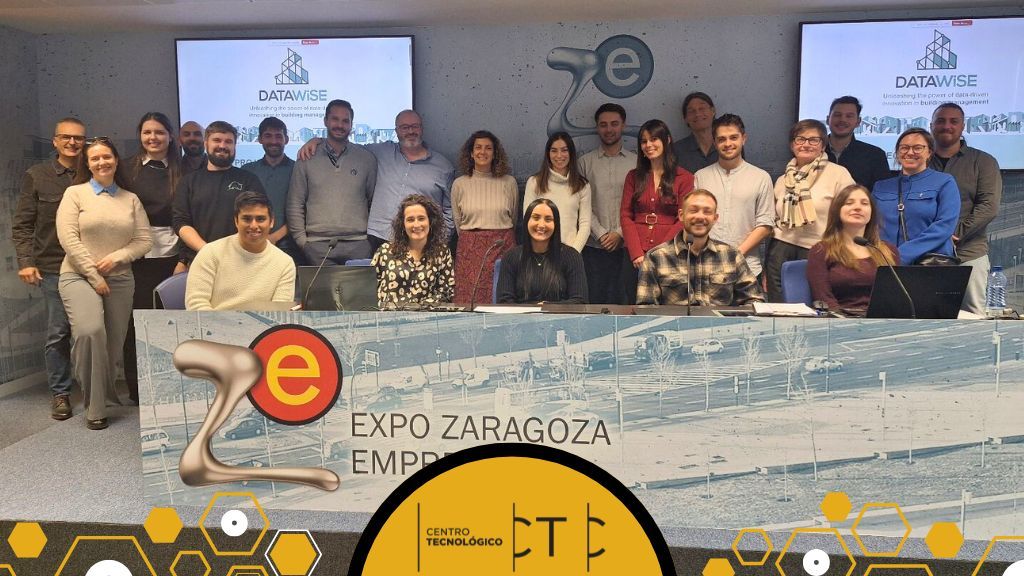
The presentation of this development took place during the Plenary Meeting of the European DATAWISE project, held in Zaragoza. During the meeting, the technical progress made over the first 18 months of the project was reviewed, the initial functional versions of the tools developed were presented, and it was confirmed that the results are progressing in line with the planned objectives.
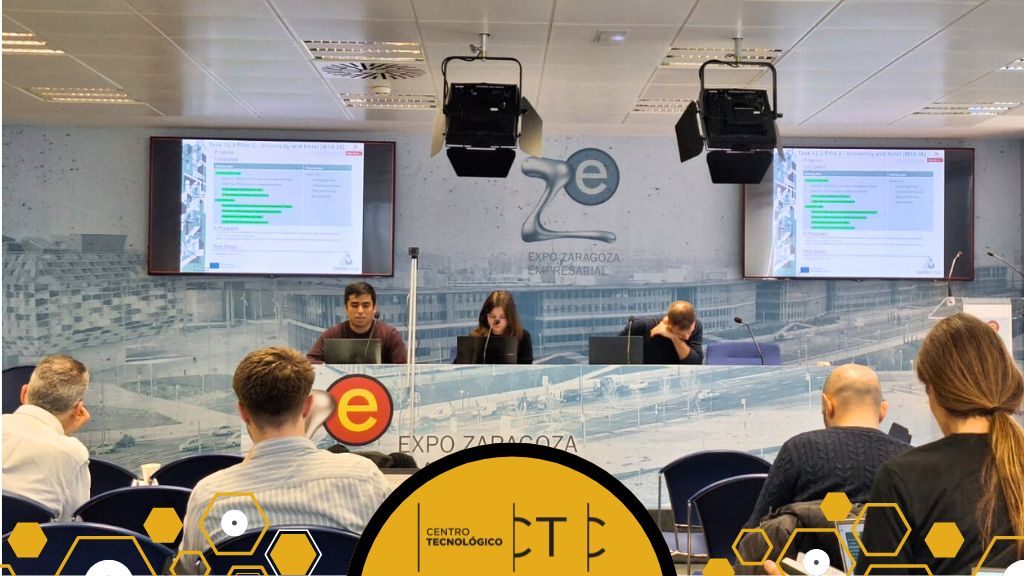
The joint achievement by CTC and VBE6D was a key highlight of this in-person meeting. Luis Fernández, director of the technology company, and Marco A. Melgarejo, Data Scientist at CTC, presented the current status of the BIM–data mining integrated digital twin, as the solution is technically known. They presented the system interface, explained the available functionalities, and demonstrated how the digital twin integrates key information on the building envelope, systems, and usage patterns derived from the BIM models.
All the developments showcased during the Plenary Meeting underscored the disruptive nature of this research, whose overarching goal is to deliver an advanced solution that integrates any data source into an Open BIM digital twin managed by artificial intelligence. This progress will be subject to validation during the mid-term review with the European Commission’s Project Officer, scheduled for 5 February.
Having passed the halfway point of the project, CTC will now focus its efforts on two main areas. On the one hand, the focus will be on integrating real-time building data into the digital twin. On the other hand, the aim is to evaluate the implementation of the remaining tools developed by the consortium at the pilot sites at Isabel II University and the Abba Hotel in Burgos.
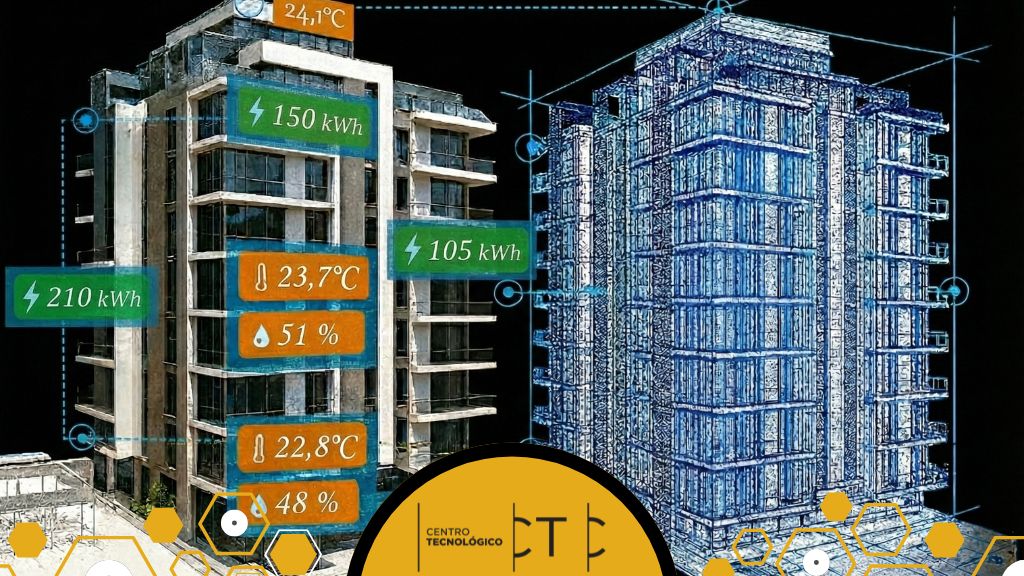
Connecting the tool to real data from the pilot buildings will reveal differences and similarities between simulated values (such as temperature, humidity, and electricity or gas consumption) and those recorded by on-site sensors. This monitoring process will involve the continuous measurement of energy, economic, comfort and data quality indicators, with the goal of verifying that the integration of these tools delivers a tangible impact on energy efficiency and decision-making.
Particular attention will be given to improving the energy performance of the pilot buildings, with the objective of achieving Net Zero Energy Building status and an A+++ energy efficiency rating. This will involve using geothermal heat pumps, roof-mounted solar panels and hypoallergenic water treatment systems that operate without chemicals.
In addition, CTC will focus on collecting end-user feedback to refine interfaces, enhance functionality, and document insights that will support replicating the model in new buildings and locations.
Beyond CTC’s tasks, the meeting also enabled the consortium to align the technical strategy for the second half of the project. This next phase will involve refining the models, strengthening their integration with real-time data, and optimising the predictive systems that support the tools. The ultimate objective is for DATAWISE to contribute to improved energy management, enhanced indoor comfort, and the advancement of smarter, more sustainable buildings.
DATAWISE is a project under the HORIZON EUROPE programme, involving 16 partners from 7 European countries who have been working collaboratively since July 2024. The CTC Technology Centre, along with the Cantabrian company VBE-6D, the Circe Foundation and the Technical University of Valencia, are the four Spanish representatives in a consortium led by the CERTH Research and Technology Centre, in Thessaloniki, Greece.
This research, funded with 5 million euros, primarily focuses on the integration and utilisation of data related to building performance. To achieve this, a data-driven management toolkit (DBPM) and an AI-enhanced lifecycle data-driven decision-support platform (LD2S) will be tested. This versatile solution facilitates informed decision-making across planning, renovation, and sustainability.

