


The Marine Corrosion Test Site El Bocal has officially joined the RISEnergy international network of research facilities, an initiative under the Horizon Europe Programme. This European project is dedicated to accelerating the development of innovative technologies that enhance the use of renewable energies. Over the next 2,500 days, this initiative will provide researchers, developers and companies access to an ecosystem of excellence consisting of 87 high-calibre infrastructures recognised at both European and international levels. This prestigious network includes only twelve Spanish laboratories and is actively supported by the European Commission.
The Karlsruhe Institute of Technology coordinates this comprehensive transnational initiative, which involves 69 institutes of technology, research centres, universities and industrial partners from 22 countries. The CTC Technology Centre participates as an affiliate of the European Energy Research Alliance , which holds full membership and serves as the cornerstone of the project.
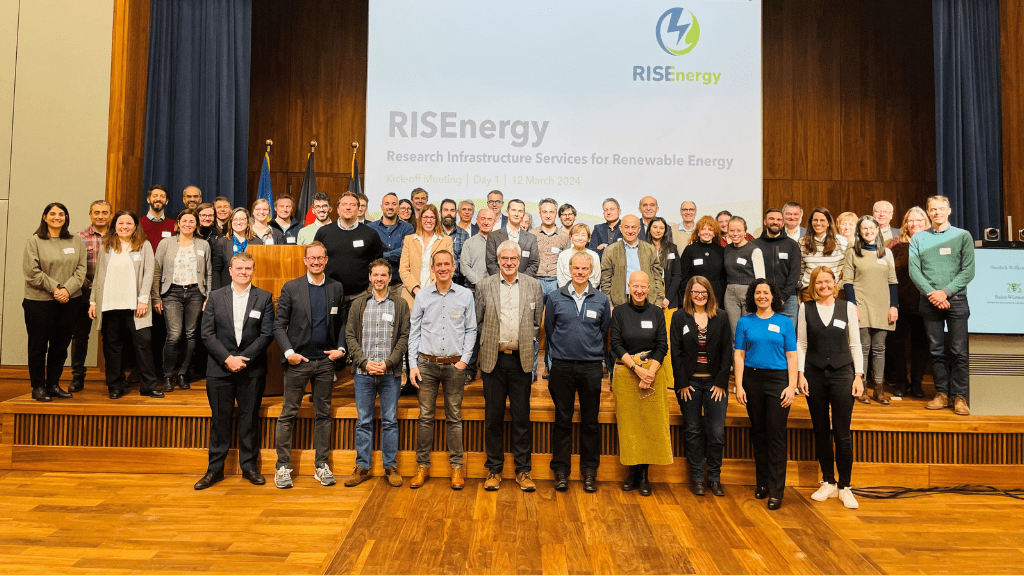
This initiative stands out in scale compared to similar projects undertaken previously. RISEnergy is the first to encompass technological development across all areas related to renewable energies. The initiative spans up to 10 fields of action, including photovoltaics, wind energy, hydrogen solutions, biofuels and various ocean energies. Additionally, it addresses the study of integrated networks, energy storage, materials research and ICT technologies.
 The Cantabrian facility, co-managed by CTC and the Spanish Institute of Oceanography, is ideally suited for executing projects related to ocean energy in its broadest sense. The facility supports a wide range of technologies, including fixed and floating offshore wind, wave, tidal, marine energy converters and salt gradient solutions. One of the main advantages of the Cantabrian facility is its ability to conduct tests and research in a marine environment that closely mirrors the conditions to which materials and structures dedicated to the production of marine renewable energies will be exposed.
The facility supports four testing conditions: submerged, tidal, splash and ambient, tailored to the samples’ exposure requirements. This setup allows for a comprehensive analysis of their evolution in response to phenomena such as marine corrosion or biofouling .
Following the recent kick off meeting in Brussels, it is now possible to request access to nearly a hundred infrastructures across 19 European countries and the United States, Canada and Japan. A committee of experts will evaluate the proposals submitted and determine the percentage of funding each will receive from the project. The initiative, with a budget of €14.5 million, finances the costs associated with the trials and covers travel and accommodation expenses for researchers. This approach is designed to stimulate innovation projects from small and medium-sized enterprises, thereby enhancing their technological advancements.
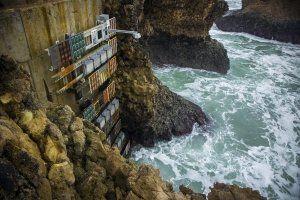
The inclusion of MCTS El Bocal in the RISEnergy project marks another significant milestone for the facility, which celebrates its tenth anniversary in 2024. Being part of this initiative represents implicit recognition from the international scientific community of the laboratory’s unique capabilities. However, this is not the first time that El Bocal has been featured in a network of test facilities. From 2017 to 2020, it was a key component of the Marine Renewables Infrastructure Network project, which greatly enhanced the international visibility of this laboratory on the Cantabrian coast. In fact, during the second call of this European network, it became the most requested facility by researchers across the continent.

