


The CTC Technology Centre has outlined a method for developing and producing luminescent nanomaterials using an environmentally sustainable approach. Dr Francisco Aguirre has demonstrated that the selection and proportion of solvents used in this process can significantly alter the properties of the resultant materials, which could be used to detect contaminants or corrosion phenomena.
Shifting from traditional solvents to safer, naturally derived solvents can produce highly luminescent materials. This innovation paves the way for the discovery of new molecules that can produce industrially relevant products while substantially reducing their environmental and health impacts.
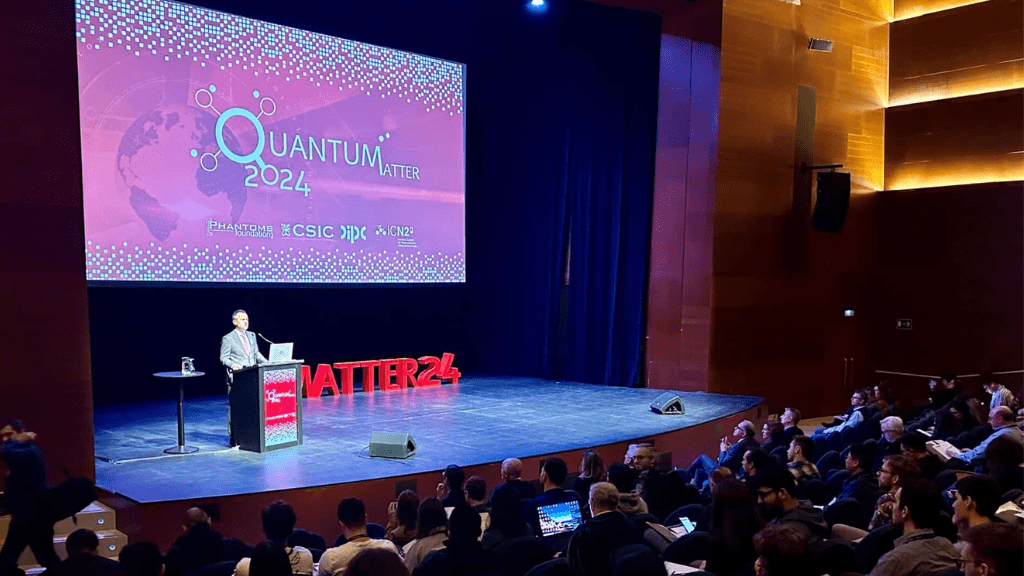
The main results of this research were presented at the fourth edition of the International Quantum Matter Conference, which gathered over 600 professionals in San Sebastián to discuss the latest advances in quantum technology.
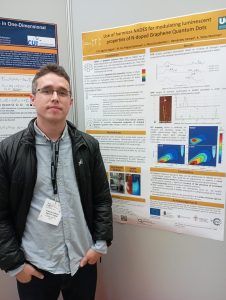
The poster by Dr Francisco Aguirre, a researcher in the Advanced Materials and Nanomaterials area at CTC, highlighted how solvents affect the production of graphene quantum dots, a type of luminescent material.
Graphene quantum dots are versatile nanostructures with significant potential across various fields, including electronics, photonics, biomedicine and catalysis. Their ability to combine unique properties at the nanoscale makes them powerful tools for the research and development of innovative technologies.
In particular, modulating luminescence is crucial for various applications of graphene quantum dots, such as cell labelling, detection of metallic analytes like iron or mercury and LED lighting. However, until now, strategies to alter the emission properties of conventional quantum dots have been constrained by toxic or corrosive solvents.
This research demonstrates that selecting and proportioning solvents can adjust the emission properties of quantum dots, thereby enabling the production of highly luminescent materials without harmful reagents. To reach this conclusion, Dr Aguirre has explored the use of specific solvent types, seeking safer and more environmentally friendly alternatives to conventional solvents.
Specifically, he proposes using naturally occurring eutectic solvents (NADES). This alternative offers low toxicity, low production costs, and high chemical stability. It presents a promising solution to conventional solvents and stands as an ideal candidate for large-scale applications in the synthesis of functional materials.
This research is part of the specialisation process undertaken by CTC within the FUTCANproject. Specifically, it is related to the development of new coatings using nanomaterials, which will enable the monitoring and early detection of degradation processes in industrial components and structures.


