


Using traditional animal traction techniques for harvesting agroforestry materials offers significant advantages, including facilitating forest maintenance, reducing environmental impact, preventing soil degradation and minimising biodiversity loss. Choosing horses over mechanical systems not only diminishes environmental impact but also revives an ancestral technique deeply entrenched among the residents of the Mancomunidad de la Reserva del Saja.
The FORTEXVAL project has reintroduced pack horses to the mountainous regions of Cantabria. This research aims to develop a new model of forest management that focuses on valorising agroforestry resources using technologies with a low carbon footprint. Incorporating horses into the harvesting process marks the initial phase of an initiative jointly promoted by the Mancomunidad de la Reserva del Saja, the Centro Tecnológico de Automoción de Galicia (CTAG) and the CTC Technological Centre.
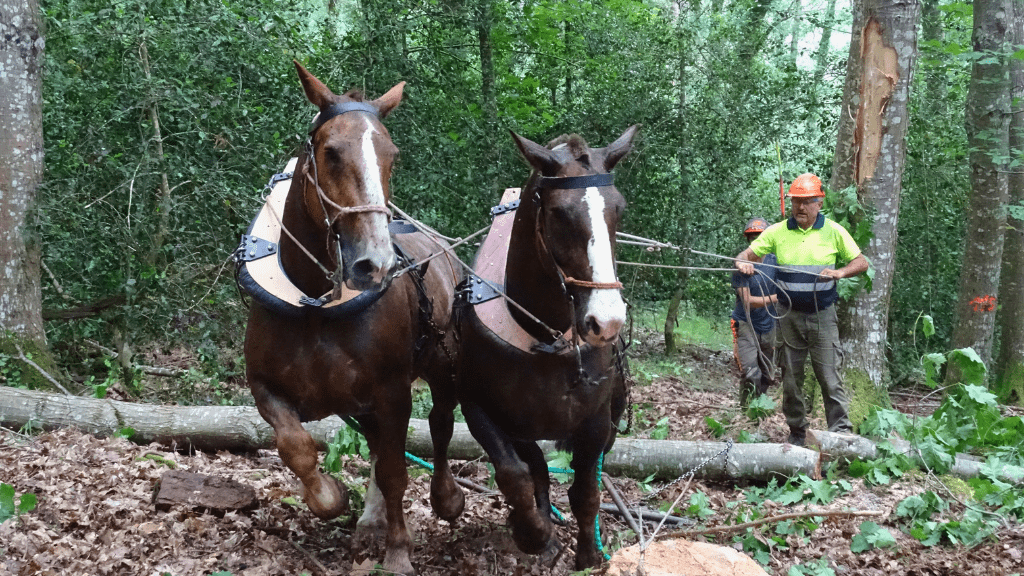
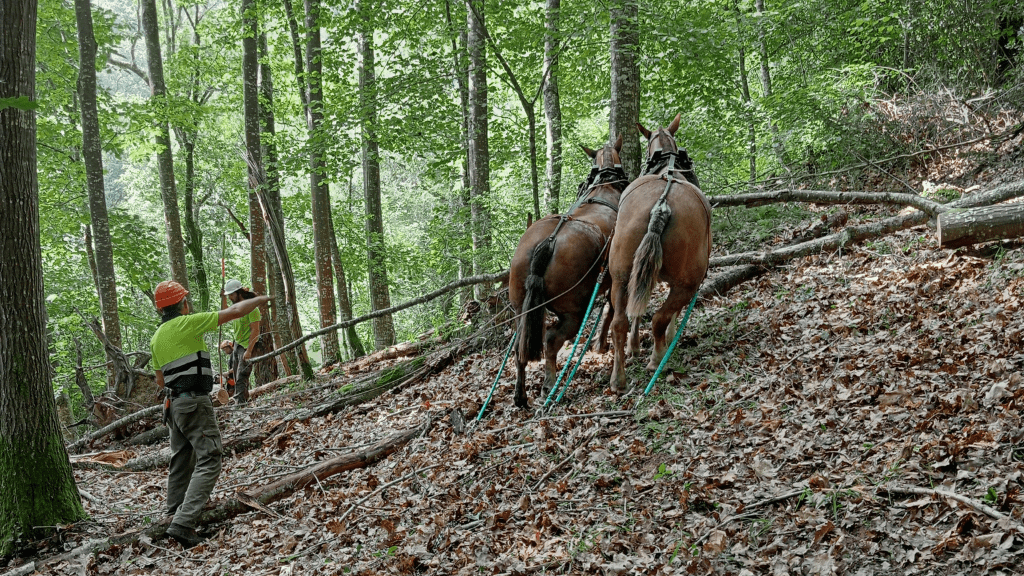
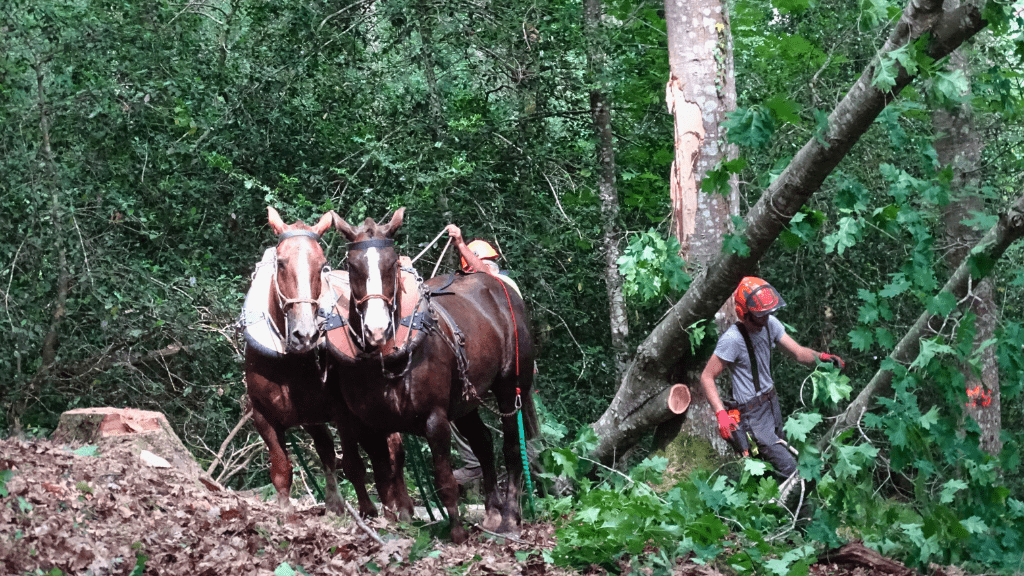
The mountains of this Mancomunidad have been chosen as the venue for the first of four pilot actions scheduled over the 17 months of the project. The objective was to integrate animal traction with modern forestry technologies. Key activities during the trial included clearing vegetation and paths overwhelmed by undergrowth, pruning branches to facilitate the movement of people and animals, harvesting initial samples for biochar production and initiating a treatment process using conditioning and densification equipment.
Additionally, crews hired through the project performed various silvicultural tasks to enhance fire prevention, which aligns with one of the project’s general goals: to bolster forest resilience against potential adverse natural events, which are being exacerbated by climate change.
FORTEXVAL proposes an alternative management model to optimise the resources of each forest area. With a funding allocation of 619,120 euros, FORTEXVAL is backed by the Biodiversity Foundation of the Ministry for Ecological Transition and the Demographic Challenge [Fundación Biodiversidad del Ministerio para la Transición Ecológica y el Reto Demográfico (MITECO)], under the Recovery, Transformation and Resilience Plan [Plan de Recuperación, Transformación y Resiliencia (PRTR)] and financed by the European Union through the NextGenerationEU programme.
Moreover, FORTEXVAL opens up a new avenue for economic development within the region by adding value to extracted forest resources. Specifically, materials like brushwood, woodchips and other elements perceived as low value are repurposed to produce biochar. Termed as nature’s “black gold”, biochar boasts a multitude of properties and high-value applications.
The product is carbon-rich, offering vast potential for development, from closing the organic waste loop to boosting crop yields and rejuvenating soil. It presents considerable atmospheric advantages, including reducing methane emissions and odours while also aiding in carbon sequestration. When incorporated into the substrate, biochar significantly enhances soil fertility and reduces nutrient loss.
Should the anticipated outcomes be realised and the project advance to an industrial scale, 300 new jobs are projected to be created. These positions will include activities related to forest management and the production of high-value items.
Fortexval is also set to undertake an experimental study aimed at exploring biochar’s potential, including its ability to retain water (a crucial attribute for mitigating drought conditions brought about by climate change), its gradual nutrient release and its efficacy in pollutant absorption from the soil.
The project’s overall objective aligns with four of the 17 Sustainable Development Goals proposed by the UN: Gender Equality (Goal 5), Decent Work and economic growth (Goal 8), Responsible Consumption and Production (Goal 12) and Climate Action (Goal 13). Should the anticipated outcomes be met, the approach could serve as a blueprint for replication in other regions facing similar socio-environmental challenges.


