The CTC Technology Centre is leading a European project designed to transform the energy sector by developing an innovative and sustainable technology to produce renewable methane. The research, called ELECTROMET, focuses on the direct valorisation of CO2 as a critical step towards integrating this fuel into the gas market and contributing to a decarbonised energy system for Spain to achieve the emission reduction targets mandated by the EU.
With a budget exceeding one and a half million euros and a 36-month timeline, the project plans to scale a pilot plant at the facilities of the Cantabrian company, Ecodualba. The pilot, featuring Net Zero CO2 technology, ensures zero environmental impact and will undergo 500 hours of operational testing. This testing will use real biogas as the feedstock to produce renewable methane.
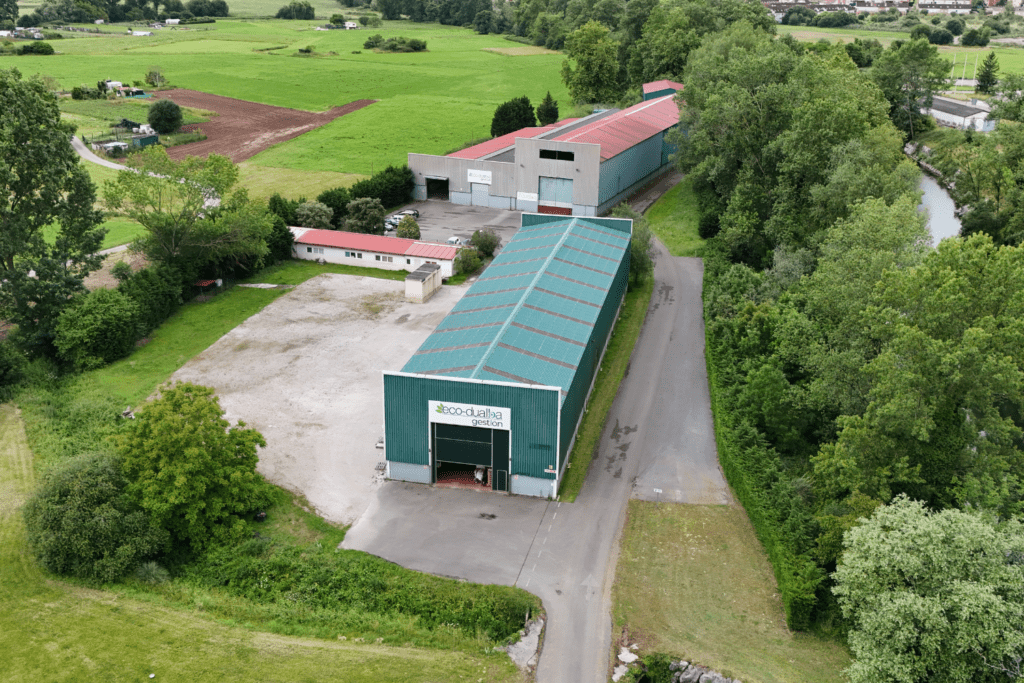
CTC is the sole technology centre in this initiative, collaborating with the Universities of Turin, Porto and Cantabria, as well as companies including Ecodualba, Draxis, Hidritec, Nortegas y Envitec Biogas.. This consortium, representing five countries, is dedicated to implementing new renewable methane production methods through CO2 electro-reduction, aiming to seamlessly integrate it as a renewable fuel in the existing market.
One of the initiative’s first objectives involves developing three new catalysts to enhance the efficiency of the biomethane production process. In addition to leading the consortium, CTC will take charge of one of these innovations, focusing on functionalised graphene quantum dots. The Politecnico di Torino and the University of Porto will spearhead the development of the other two catalysts envisioned for the project.

Key components of the initiative include the aforementioned industrial pilot, which boasts zero emissions and the capacity to operate in real environments. Additionally, the creation of a digital twin will optimise and scale the technology for industrial scenarios, and the development of a roadmap aims to facilitate technology implementation by overcoming technical, regulatory and social barriers.
This initiative, aligned with the EU’s strategy for clean energy transition and climate change mitigation, should enable Spain to capitalise on the economic, industrial and environmental benefits of biomethane production.
Biomethane is a 100% renewable gas derived from the natural degradation of organic matter, obtained by treating biogas to remove certain impurities. It has a chemical composition and energy potential very similar to natural gas, which allows it to be injected into the gas network for use in heating, transport and electricity production. As such, biomethane emerges as a powerful ally in decarbonisation, offering an effective solution to waste management challenges and promoting the circular economy.
However, despite its significant potential, the biomethane market in Spain is still in its infancy. According to the ‘Statistical Report 2024’ by the European Biogas Association (EBA), Spain’s biomethane production is projected to reach 252 GWh in 2023. This figure is modest compared to other European nations, such as Italy with 3,392 GWh, France with 2,164 GWh and the United Kingdom with 634 GWh. The disparity is evident in comparisons with Denmark, where biomethane substitutes for 34% of the natural gas demand with an annual production of 926 GWh, whereas in Spain, it accounts for only 0.1% of the natural gas demand.
Despite these current statistics, Spain possesses substantial untapped potential for biomethane development. In its ‘Study of biomethane production capacity in Spain’, the Spanish Gas Association (Sedigas) forecasts that Spain could potentially produce over 163 TWh of biomethane every year. This projection positions Spain as the fourth leading country in Europe in terms of biomethane production potential, primarily due to the significant contributions of the food, agriculture and livestock sectors.
Additionally, the biogas roadmap, released in early 2022, along with the REPowerEU Plan, aims to quadruple biomethane production across Europe and achieve a minimum inclusion of 1% biomethane in gas mixes by 2030. This goal aligns with Spain’s National Integrated Energy and Climate Plan (Plan Nacional Integrado de Energía y Clima, PNIEC), which formalised a target of 20 TWh for biogas and biomethane production by 2030.
Both roadmaps emphasise that the deployment of renewable gases will be crucial for enhancing the EU’s competitiveness and leadership in clean technologies in the upcoming years and bolstering the resilience of Europe’s energy system, particularly in reducing dependency on external energy sources.
This research is supported by the CETPartnership, under the Joint Call 2023. The CETPartnership research projects receive co-funding from the European Commission (Grant Agreement No. 101069750) and various national funding organisations, details of which can be found on the CETPartnership website.