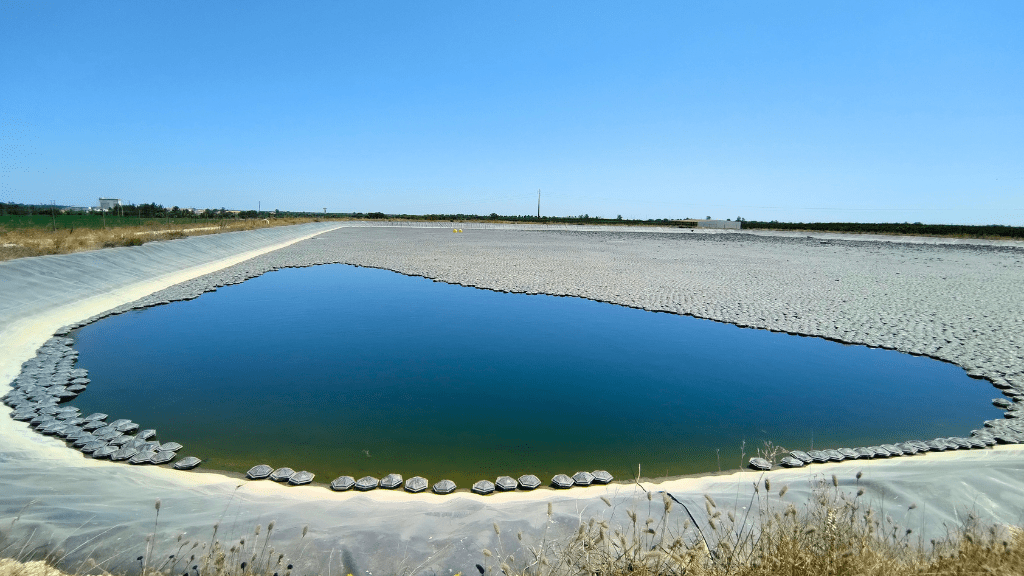
Researchers from the CTC Technology Centre have successfully installed the electronic equipment necessary to complete the validation of the LIFE H2OLOCK project in Portugal. Verónica González de Lena, the centre’s Industry and Energy manager, and Laura Saiz, a computer technician, have equipped an irrigation pond in the Palmela region, near Setúbal, with the devices necessary to monitor images and meteorological parameters. This second demonstrator will enable the consortium to gather essential data to promote sustainable water management in agricultural reservoirs.
It is a smaller-scale replica of the one installed at the La Jeresa reservoir in Lorca. With the data collected from cameras, various computing devices and weather stations, the consortium aims to calculate the area of the water surface covered by plastic modules and directly correlate this with the reduction in water evaporation. To achieve this, they will employ a machine vision algorithm designed and developed entirely by CTC, which has already been successfully tested on the previous prototype. The validation of the monitoring system is expected to continue until October this year.
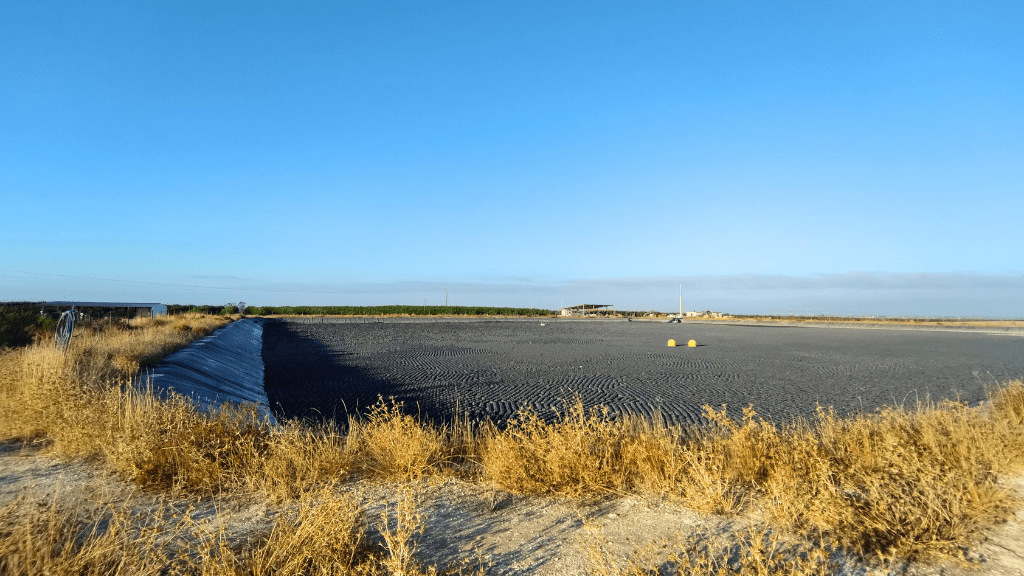
The primary objective of LIFE H2OLOCK is to reduce water evaporation from these basins to 80-85%, compared to the 75-80% reduction achieved by existing solutions on the market. The project anticipates minimising algae growth without relying on algaecides and generating renewable energy for irrigation systems through the installation of solar panels on the covers that will shield the ponds.
The LIFE H2OLOCK project is supported by a budget of EUR 1.8 million and features a consortium comprising a European interdisciplinary team, which includes Arana, the coordinating company known for pioneering sustainable water pond coverings for agricultural use in Europe; the Lorca Irrigation Community (Comunidad de Regantes de Lorca, CRL), among Spain’s largest irrigation communities; Avipe, the Portuguese Farmers’ Association with a focus on the vine sector; Arada, an engineering firm specialising in hydraulic infrastructures with expertise in water and energy conservation projects; Global Factor International, a consultancy firm specialising in climate neutrality and sustainability; and the CTC Technology Centre.
In addition to developing the monitoring system, the CTC has simulated and analysed the effects of harsh environmental conditions on the performance of both the modules and the floating blankets. As a result of these simulations, improvements have been made to the design, including the development of a new joint for the blankets and a more optimal arrangement of the lashing attachments. Among other things, the Cantabrian research team has successfully ensured that the protective elements consistently return to their designated positions in all instances. These modifications will diminish the impact of wind and other environmental conditions on the performance of the roof, thereby enhancing both the effectiveness and efficiency of the system.
This European research is expected to conclude on 31 October 2025.